
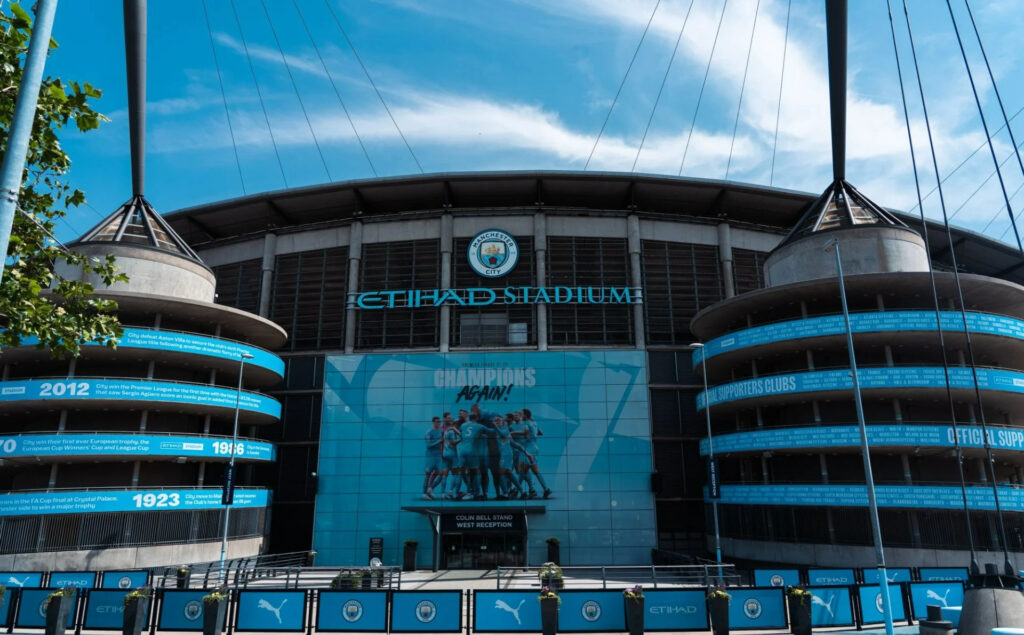
The Etihad Stadium stands as one of the most modern and recognizable football venues in Europe. Home to Manchester City Football Club since 2003, the stadium has witnessed one of the greatest transformations in football history. From hosting the 2002 Commonwealth Games to becoming the stage for Premier League title celebrations, Champions League nights, and unforgettable football moments, the Etihad has become much more than just a stadium.
Located in East Manchester, the stadium symbolizes the regeneration of an entire area while reflecting Manchester City’s rise from a respected English club into one of world football’s elite teams.
Today, millions of football fans from around the globe visit the Etihad Stadium each year to experience its electric atmosphere, cutting-edge facilities, and rich sporting heritage.
This comprehensive guide explores the history of the Etihad Stadium, its architectural evolution, expansion projects, visitor experience, and everything supporters need to know before attending a match.
The Origins of Etihad Stadium
Before it became Manchester City’s home, the stadium was originally built for the 2002 Commonwealth Games.
Construction began in December 1999 after Manchester successfully secured hosting rights for the international sporting event.
Originally known as the City of Manchester Stadium, the venue was designed specifically as an athletics stadium featuring a running track surrounding the field.
The Commonwealth Games proved enormously successful, and the stadium quickly became one of Britain’s finest sporting venues.
However, football soon became its long-term future.
From Athletics Stadium to Football Fortress
After the Commonwealth Games concluded, Manchester City reached an agreement with Manchester City Council to move from their historic home at Maine Road.
Between 2002 and 2003, the stadium underwent significant redevelopment.
The running track was removed, and the playing surface was lowered to allow seating to move much closer to the pitch.
This transformation dramatically improved the atmosphere and increased spectator capacity.
Manchester City officially moved into the stadium for the beginning of the 2003–04 Premier League season.
The transition marked the beginning of a new chapter in the club’s history.
Why Manchester City Left Maine Road
Maine Road had served Manchester City faithfully since 1923.
Although it possessed tremendous history and character, several challenges made relocation necessary:
-
Limited opportunities for expansion
-
Aging infrastructure
-
Outdated hospitality facilities
-
Increasing maintenance costs
-
Growing commercial demands
-
Need for a world-class venue
Moving to East Manchester allowed the club to modernize while supporting the area’s wider regeneration.
The Naming Rights Deal
For almost a decade, the stadium retained its original name, the City of Manchester Stadium.
In 2011, following the Abu Dhabi ownership’s investment in the club, a landmark sponsorship agreement was reached with Etihad Airways.
The deal included:
-
Stadium naming rights
-
Shirt sponsorship
-
Broader commercial partnerships
Since then, it has been officially known worldwide as the Etihad Stadium.
The partnership has become one of football’s most recognizable naming-rights agreements.
Etihad Stadium Capacity
The stadium currently accommodates more than 53,000 spectators, making it one of the largest football stadiums in England.
Current Seating Distribution
| Stand | Primary Features |
|---|---|
| North Stand | Home supporters and family areas |
| South Stand | Passionate home fans and singing section |
| East Stand | General seating and hospitality |
| West Stand | Premium hospitality, executive boxes, media facilities |
The bowl-shaped design ensures excellent sightlines from every section.
Expansion Plans
Manchester City’s continued success has dramatically increased ticket demand.
As a result, the club launched ambitious expansion projects designed to transform the Etihad Campus into one of Europe’s premier sporting destinations.
North Stand Expansion
The latest redevelopment focuses primarily on the North Stand.
The project includes:
-
Thousands of additional seats
-
A covered fan zone
-
New hospitality lounges
-
Restaurants and bars
-
Museum enhancements
-
Club shop improvements
-
Sky bar overlooking the pitch
-
Hotel integration
-
Expanded public spaces
Once completed, the stadium’s capacity is expected to exceed 60,000, placing it among England’s largest football venues.
The Etihad Campus
The stadium is only one part of a much larger sports complex.
The surrounding Etihad Campus includes:
-
City Football Academy
-
First-team training facilities
-
Women’s team facilities
-
Youth academy
-
Indoor training pitches
-
Sports science centers
-
Community football pitches
Few football clubs possess such an integrated sporting environment.
Stadium Architecture
The Etihad Stadium is widely praised for its elegant yet functional design.
Notable architectural features include:
-
Cable-supported roof
-
Open concourses
-
Excellent natural lighting
-
Bowl-shaped seating arrangement
-
Modern accessibility features
-
Spacious hospitality suites
The roof structure has become one of Manchester’s architectural landmarks.
Matchday Atmosphere
One of the stadium’s greatest strengths is its matchday experience.
Several hours before kick-off, thousands of supporters gather around the stadium to enjoy entertainment, food, and live music.
The atmosphere builds steadily as fans fill the stands.
During major Premier League and Champions League fixtures, the Etihad becomes one of Europe’s loudest football venues.
Fan Zones and Entertainment
Manchester City has invested heavily in improving the supporter experience.
Visitors can enjoy:
-
Live music performances
-
Interactive football games
-
Player interviews
-
Family activities
-
Food markets
-
Merchandise stores
-
Giant screens
-
Community events
The fan zone opens several hours before kick-off.
Food and Drink Options
The Etihad offers a wide range of refreshments.
Popular options include:
-
Traditional pies
-
Fish and chips
-
Burgers
-
Pizza
-
Street food
-
Vegetarian meals
-
Vegan options
-
International cuisine
-
Coffee bars
-
Desserts
Cashless payment systems help reduce waiting times.
Hospitality Experience
The Etihad Stadium is recognized as one of England’s premier hospitality venues.
Packages often include:
| Package | Features |
|---|---|
| Executive Boxes | Private suites, premium dining, balcony seating |
| Tunnel Club | Glass tunnel view, luxury dining, player access |
| Legends Lounge | Former player appearances, fine dining |
| Premium Seating | Excellent views with hospitality access |
These experiences attract corporate guests from around the world.
Stadium Tours
One of Manchester City’s most popular attractions is the behind-the-scenes stadium tour.
Visitors typically explore:
-
Dressing rooms
-
Players’ tunnel
-
Pitchside
-
Press conference room
-
Hospitality lounges
-
Manager’s dugout
-
Museum exhibits
Interactive multimedia experiences make the tour enjoyable for supporters of all ages.
Accessibility
The Etihad Stadium has earned praise for its accessibility initiatives.
Facilities include:
-
Wheelchair spaces
-
Accessible toilets
-
Audio commentary services
-
Lift access
-
Assistance dogs welcome
-
Dedicated supporter assistance teams
-
Accessible parking
These features ensure football remains inclusive for every supporter.
Memorable Moments at Etihad Stadium
Many iconic matches have taken place at the Etihad.
Some unforgettable moments include:
Agüero’s Historic Goal
Although the title-winning “93:20” goal occurred at the club’s previous home fixture in the 2011–12 season, the Etihad became the venue for countless celebrations during that championship campaign and many that followed.
Champions League Success
The stadium has hosted dramatic knockout victories over Europe’s biggest clubs, contributing to Manchester City’s journey toward continental glory.
Premier League Title Celebrations
The Etihad has witnessed numerous trophy presentations, record-breaking seasons, and unforgettable title-clinching performances.
Sustainability Initiatives
Manchester City has committed to making the Etihad Campus more environmentally responsible.
Key initiatives include:
-
Energy-efficient lighting
-
Waste recycling programs
-
Water conservation
-
Sustainable transport encouragement
-
Improved cycling facilities
-
Reduced single-use plastics
These efforts support the club’s long-term sustainability goals.
Visiting the Etihad Stadium
Whether attending a match or taking a tour, planning ahead is recommended.
Travel Options
| Method | Details |
|---|---|
| Tram | Fast access via Manchester Metrolink |
| Bus | Multiple city routes serve the stadium |
| Train | Manchester Piccadilly is nearby |
| Car | Official parking available (advance booking recommended) |
| Walking | Approximately 30–40 minutes from Manchester city centre |
Arriving early allows visitors to enjoy the fan zone and avoid peak entry times.
Why the Etihad Stadium Is One of Europe’s Best Football Venues
Several factors distinguish the Etihad from many stadiums:
-
Outstanding sightlines
-
Modern facilities
-
Excellent transport connections
-
Family-friendly environment
-
Premium hospitality
-
Interactive fan experiences
-
Continuous investment
-
Integration with the City Football Academy
-
Ambitious expansion plans
-
Strong commitment to accessibility
As Manchester City continues to compete for major honours, the stadium is evolving alongside the club.
The Future of the Etihad Stadium
The Etihad Stadium is entering another exciting chapter.
The North Stand redevelopment, improved entertainment district, expanded hospitality offerings, and increased seating capacity will ensure the venue remains among Europe’s elite for decades to come.
Beyond football, the stadium is expected to host concerts, community events, and international sporting occasions, reinforcing its role as one of Manchester’s most important landmarks.
For supporters, the Etihad is more than a stadium—it is the heart of Manchester City’s identity and a symbol of the club’s extraordinary journey.
Conclusion
From its origins as the centerpiece of the 2002 Commonwealth Games to its transformation into the home of Manchester City, the Etihad Stadium has become one of the world’s premier football venues. Its combination of innovative architecture, passionate supporters, first-class facilities, and ambitious expansion plans reflects the club’s rise to the top of English and European football.
Whether you’re attending your first Manchester City match, exploring the stadium on a guided tour, or simply learning about its history, the Etihad offers a memorable experience that extends well beyond the 90 minutes on the pitch. With ongoing investment and a vision for the future, it is set to remain one of football’s most iconic destinations for generations to come.
External Resources
-
Manchester City Official Stadium Information: https://www.mancity.com/
-
Premier League Stadium Guide: https://www.premierleague.com/
-
UEFA Stadium Information: https://www.uefa.com/
-
Visit Manchester: https://www.visitmanchester.com/
-
Transport for Greater Manchester: https://tfgm.com/
-
City Football Group: https://www.cityfootballgroup.com/
Frequently Asked Questions (FAQs)
What is the history of the Etihad Stadium?
The Etihad Stadium was originally built as the City of Manchester Stadium for the 2002 Commonwealth Games. After the event, it was converted into a football stadium, and Manchester City moved there in 2003 from Maine Road.
Why is it called the Etihad Stadium?
The stadium was renamed Etihad Stadium in 2011 after Manchester City signed a long-term naming rights and sponsorship agreement with Etihad Airways.
What is the capacity of the Etihad Stadium?
The Etihad Stadium currently holds more than 53,000 spectators. Following the completion of the North Stand redevelopment, capacity is expected to exceed 60,000.
What are the Etihad Stadium expansion plans?
The latest expansion includes a larger North Stand, thousands of additional seats, a hotel, new hospitality areas, restaurants, a sky bar, museum upgrades, and enhanced fan zones, creating a year-round entertainment destination.
Can you tour the Etihad Stadium?
Yes. Guided tours allow visitors to explore the dressing rooms, players’ tunnel, pitchside, press conference room, hospitality suites, and other behind-the-scenes areas. Interactive experiences make the tour suitable for fans of all ages.
How do I get to the Etihad Stadium?
The stadium is easily accessible by Manchester Metrolink tram services, local buses, train connections via Manchester Piccadilly, car (with pre-booked parking), or on foot from Manchester city centre.
What is the Etihad Campus?
The Etihad Campus is the wider sports complex surrounding the stadium. It includes the City Football Academy, first-team and academy training facilities, women’s team facilities, community pitches, and sports science centers.
What makes the Etihad Stadium matchday experience special?
The Etihad offers a complete matchday experience with lively fan zones, live entertainment, diverse food and drink options, family activities, premium hospitality, excellent sightlines, and a welcoming atmosphere that attracts supporters from around the world.