History of Manchester City: From 1880 to World Champions
The story of Manchester City is one of football’s most remarkable transformations. Founded in 1880 and once struggling in England’s lower divisions, the club has evolved into a dominant global powerhouse — winning domestic titles, conquering Europe, and becoming world champions.
This in-depth guide explores Manchester City’s journey from its early origins to its rise under modern ownership, culminating in Premier League dominance, Champions League glory, and global recognition.
1880–1894: Humble Beginnings
Manchester City began in 1880 as St. Mark’s (West Gorton), formed to provide activities for local workers and reduce gang violence in East Manchester.
Key early milestones:
-
1887: Renamed Ardwick AFC
-
1894: Officially became Manchester City Football Club
The club joined the English Football League system and slowly built a competitive reputation.
For more about the origins of English football, see the history of the English Football League.
1904: First Major Trophy
Manchester City’s first major success came in 1904 when they won the FA Cup, becoming the first Manchester club to win a major trophy.
This achievement firmly established City on the national stage and laid the foundation for future ambitions.
1930s–1970s: Early Glory and European Recognition
League Champions
City won their first top-flight title in 1936–37 in what is now the Premier League (then First Division).
However, football history delivered a strange twist — they were relegated the following season despite being the league’s highest scorers.
The Mercer-Allison Era (1960s–70s)
Under Joe Mercer and Malcolm Allison, Manchester City entered a golden era:
-
League Champions (1967–68)
-
FA Cup Winners (1969)
-
European Cup Winners’ Cup (1970)
The 1970 European triumph marked City’s first major continental success.
Learn more about European competitions at UEFA Champions League.
1980–2008: Decline, Relegation and Rebuilding
The 1980s and 1990s were turbulent. Manchester City experienced relegation, instability, and even dropped to England’s third tier in 1998–99.
Yet this period strengthened the club’s identity. Supporters remained loyal through adversity, creating a resilient fan culture that would later define the club’s rebirth.
2008: The Transformational Takeover
The acquisition by Abu Dhabi United Group in 2008 reshaped Manchester City’s future.
Massive investment allowed the club to:
-
Sign elite international players
-
Develop world-class training facilities
-
Expand global commercial presence
This marked the start of City’s modern dynasty.
2011–12: The Aguero Moment
The 2011–12 season remains one of the most dramatic in English football history.
On the final day of the Premier League season, Sergio Agüero scored a last-minute goal against QPR to secure the title.
That moment ended a 44-year wait for a league championship and signaled Manchester City’s arrival among England’s elite.
The Guardiola Revolution (2016–Present)
The appointment of Pep Guardiola in 2016 transformed Manchester City into one of the most tactically advanced teams in world football.
Guardiola implemented:
-
Positional play
-
High pressing
-
Tactical fluidity
-
Inverted full-backs
-
Ball-dominant midfield control
Under his leadership, City achieved unprecedented domestic and European success.
The Treble Season: 2022–23
The defining chapter in Manchester City’s history came during the 2022–23 season.
City won:
-
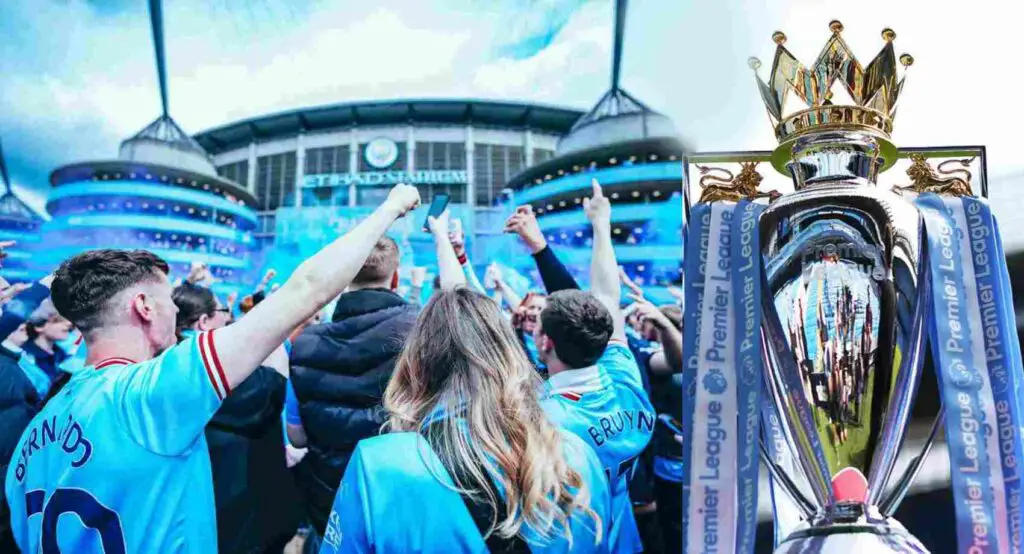
Premier League
-
FA Cup
-
UEFA Champions League
Only one other English club — Manchester United — had previously completed a treble.
This achievement elevated Manchester City to global elite status.
From European Champions to World Champions
Following their Champions League triumph, Manchester City won the FIFA Club World Cup, officially becoming world champions.
The victory confirmed their dominance beyond domestic competitions.
Major Trophy Comparison by Era
| Era | League Titles | FA Cups | League Cups | European Titles | Notable Achievement |
|---|---|---|---|---|---|
| 1880–1960 | 1 | 2 | 0 | 0 | First FA Cup (1904) |
| 1960–1980 | 1 | 2 | 1 | 1 | European Cup Winners’ Cup |
| 1980–2008 | 0 | 0 | 0 | 0 | Promotion comeback |
| 2008–Present | Multiple | Multiple | Multiple | UCL + Club World Cup | Treble Season |
All-Time Top Scorers Comparison
| Player | Goals | Era | Major Titles Won |
|---|---|---|---|
| Sergio Agüero | 250+ | 2011–2021 | Multiple PL titles |
| Raheem Sterling | 130+ | 2015–2022 | Domestic dominance |
| Erling Haaland | 100+ | 2022–Present | Treble winner |
Featuring Erling Haaland — who broke the Premier League single-season scoring record.
Records That Defined Manchester City
Manchester City has broken numerous records, including:
-
100 Premier League points (2017–18)
-
Most wins in a season (32)
-
Most goals in a season (106 league goals)
-
Domestic quadruple (2018–19 domestic sweep)
These milestones reinforced City’s statistical dominance.
Frequently Asked Questions (Structured SEO FAQ)
How was Manchester City founded?
Manchester City was founded in 1880 as St. Mark’s (West Gorton). The club became Manchester City in 1894 and gradually joined the English Football League system.
When did Manchester City become world champions?
Manchester City became world champions after winning the FIFA Club World Cup following their 2023 Champions League triumph.
What is Manchester City’s most successful era?
The most successful era began after 2008, particularly under Pep Guardiola from 2016 onward, including the historic 2022–23 treble season.
Who is Manchester City’s greatest player?
Sergio Agüero is widely regarded as the club’s greatest player due to his goal record and iconic 2012 title-winning goal.
How many Premier League titles has Manchester City won?
Manchester City has won multiple Premier League titles, with the majority coming in the modern era after 2012.
Conclusion
The history of Manchester City is a journey of resilience, ambition, and transformation.
From a small community club in 1880 to European and world champions, City’s evolution reflects strategic investment, tactical innovation, and elite talent development.
Today, Manchester City stands among the most dominant clubs in world football — and its story is still being written.