Introduction
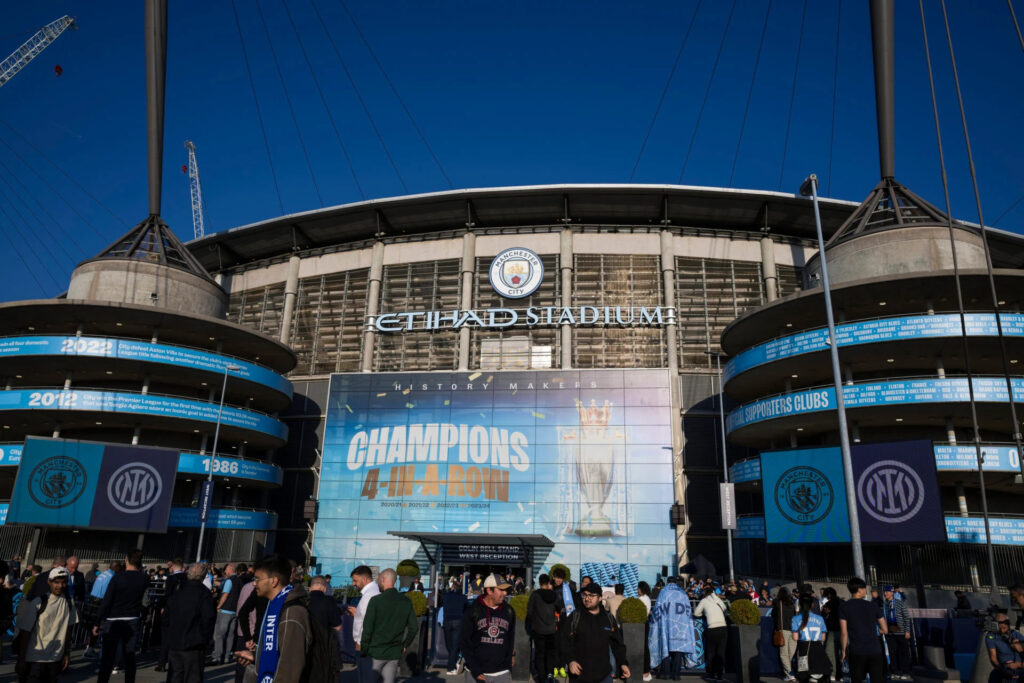
The history of Manchester City is one of resilience, ambition, reinvention, and extraordinary success. Founded in 1880 as a church football team, the club has experienced almost every emotion imaginable in professional football—from financial struggles and relegation battles to record-breaking triumphs and becoming champions of Europe and the world.
Every great football club has defining moments that shape its identity. For Manchester City, these turning points were not always victories. Some were painful defeats, controversial decisions, or periods of rebuilding that ultimately strengthened the club’s character. Others were unforgettable achievements that changed English football and established Manchester City among the elite clubs of world football.
Understanding the top turning points in Manchester City’s history provides valuable insight into how the club evolved over nearly 150 years. These milestones demonstrate that lasting success is rarely achieved overnight. Instead, it is built through perseverance, visionary leadership, strategic planning, and the unwavering support of loyal fans.
In this comprehensive guide, we explore the most significant moments that transformed Manchester City from a local church team into one of football’s greatest success stories.
1. The Foundation of St. Mark’s (1880)
Every great story begins somewhere, and Manchester City’s began in one of the most deprived areas of Victorian England.
In 1880, members of St. Mark’s Church in West Gorton established a football team to help reduce gang violence, encourage healthy recreation, and strengthen the local community.
Unlike many clubs formed primarily for sporting competition, Manchester City’s origins were rooted in social responsibility.
Why This Was a Turning Point
Without the creation of St. Mark’s, Manchester City would never have existed. The club’s community-first philosophy continues to influence its identity today.
Key Impact:
-
Established the club’s foundation
-
Promoted community engagement
-
Created opportunities for local youth
-
Began a football journey spanning more than a century
2. Becoming Manchester City (1894)
After operating as Ardwick AFC for several years, financial problems threatened the club’s survival.
A major restructuring in 1894 resulted in a new identity: Manchester City Football Club.
The name change represented more than rebranding. It reflected a broader ambition to represent the entire city rather than a single neighborhood.
Comparison of the Club’s Early Identity
| Period | Club Name | Significance |
|---|---|---|
| 1880–1887 | St. Mark’s (West Gorton) | Community football team |
| 1887–1894 | Ardwick AFC | Early professional era |
| 1894–Present | Manchester City FC | City-wide identity and long-term growth |
This transformation laid the foundation for the club’s national recognition.
3. Winning the First FA Cup (1904)
Manchester City’s first major trophy arrived in 1904 when they lifted the FA Cup.
The victory was historic because City became the first club from Manchester to win a major national football competition.
Why It Mattered
The triumph established Manchester City as a serious force in English football and attracted new supporters across the country.
It also proved that the club could compete with the best teams of its era.
4. Winning the First League Championship (1937)
Success continued with Manchester City’s first English league title during the 1936–37 season.
The club showcased attacking football and consistency throughout the campaign, finishing at the top of the First Division.
A Remarkable Twist
In one of football’s greatest ironies, Manchester City was relegated the very next season despite scoring more goals than any other team in the division.
This unusual event remains one of the most memorable chapters in English football history.
5. Moving to Maine Road (1923)
Although this move occurred before the league title, it represented one of the club’s most important long-term decisions.
After Hyde Road was severely damaged by fire, Manchester City relocated to Maine Road.
The new stadium became one of England’s largest and most iconic football grounds.
Benefits of the Move
| Hyde Road | Maine Road |
|---|---|
| Smaller capacity | Larger crowds |
| Basic facilities | Improved infrastructure |
| Limited expansion | Greater long-term growth |
| Older stadium | Modern venue for its era |
Maine Road served as Manchester City’s home for 80 years and witnessed countless unforgettable moments.
6. The Mercer-Allison Revolution (1960s)
One of the greatest turning points came with the arrival of manager Joe Mercer and coach Malcolm Allison.
Together, they transformed Manchester City into one of England’s most exciting teams.
Between 1968 and 1970, City won:
-
First Division
-
FA Cup
-
League Cup
-
European Cup Winners’ Cup
-
Community Shield
Their attacking style and innovative coaching inspired future generations.
7. Years of Decline and Relegation
Following the success of the late 1960s and early 1970s, Manchester City entered a prolonged period of instability.
The club faced:
-
Financial uncertainty
-
Frequent managerial changes
-
Inconsistent performances
-
Relegations
The lowest point came in 1998, when City dropped into England’s third tier.
Many believed the club would struggle to recover.
Why This Became a Turning Point
Rather than destroying Manchester City, these difficult years strengthened the relationship between the club and its supporters.
The loyalty shown during this period remains a defining characteristic of City’s fan base.
8. Promotion from Division Two (1999)
Manchester City’s dramatic play-off victory against Gillingham in 1999 is regarded as one of the greatest matches in club history.
Trailing 2–0 late in the game, City scored twice before winning on penalties.
Lasting Significance
This comeback restored hope throughout the club and marked the beginning of Manchester City’s return to the highest level of English football.
Many supporters still describe the match as one of the most emotional moments they have ever experienced.
9. New Ownership in 2008
Perhaps no single event changed Manchester City’s future more dramatically than the takeover by Abu Dhabi United Group in 2008.
The new ownership adopted a long-term strategy focused on sustainable success.
Investment extended beyond player transfers into:
-
Training facilities
-
Youth development
-
Medical departments
-
Women’s football
-
Community projects
-
Global scouting
-
Analytics
This holistic approach transformed Manchester City into one of football’s best-run organizations.
10. Ending the Trophy Drought (2011)
Manchester City ended a 35-year wait for a major trophy by winning the FA Cup in 2011.
The victory represented much more than silverware.
It demonstrated that the club’s rebuilding project was delivering results.
Confidence throughout the club grew significantly following this success.
11. Agüero’s Goal and the 2012 Premier League Title
Few moments in football history are more iconic than Sergio Agüero’s injury-time goal against Queens Park Rangers.
With seconds remaining in the season, City secured their first Premier League title in dramatic fashion.
Why This Moment Changed Everything
The goal:
-
Ended a 44-year wait for a league championship
-
Created one of football’s most famous commentaries
-
Established Manchester City among England’s elite
-
Inspired a new generation of supporters
Many fans consider it the greatest moment in Premier League history.
12. Pep Guardiola Arrives (2016)
When Pep Guardiola became Manchester City manager, expectations rose to another level.
His influence extended beyond winning trophies.
He transformed:
-
Tactical philosophy
-
Player development
-
Squad rotation
-
Training methods
-
Positional play
Manchester City became one of the world’s most admired football teams.
13. The Centurions Season (2017–18)
Manchester City became the first Premier League club to reach 100 points in a single season.
Records Broken
| Achievement | Record |
|---|---|
| Points | 100 |
| Wins | 32 |
| Goals | 106 |
| Goal Difference | +79 |
This campaign redefined excellence in English football.
14. Winning the Domestic Treble (2018–19)
Manchester City became the first English men’s club to win:
-
Premier League
-
FA Cup
-
League Cup
in the same season.
The achievement highlighted the squad’s extraordinary quality and consistency.
15. Champions of Europe (2023)
After years of disappointment in Europe, Manchester City finally lifted the UEFA Champions League.
Rodri’s winning goal against Inter Milan secured the club’s greatest achievement.
The victory completed a journey that had taken decades.
16. Becoming World Champions
Manchester City’s remarkable 2023 continued with victories in:
-
UEFA Super Cup
-
FIFA Club World Cup
The club officially became world champions for the first time.
This represented the pinnacle of Manchester City’s evolution.
Manchester City’s Greatest Turning Points at a Glance
| Turning Point | Long-Term Impact |
|---|---|
| Foundation (1880) | Club established |
| Name change (1894) | City-wide identity |
| FA Cup (1904) | First major trophy |
| League title (1937) | National recognition |
| Maine Road | Infrastructure growth |
| Mercer era | Golden generation |
| 1999 comeback | Revival begins |
| 2008 takeover | Modern transformation |
| 2012 Premier League | New era of success |
| Guardiola appointment | Tactical revolution |
| Champions League | European champions |
| Club World Cup | World champions |
Why These Turning Points Matter
Each milestone built upon the previous one.
Manchester City’s success was not the result of a single decision or investment.
Instead, it reflected decades of:
-
Community support
-
Strategic leadership
-
Strong recruitment
-
Youth development
-
Tactical innovation
-
Organizational excellence
These turning points collectively shaped one of football’s greatest modern success stories.
Conclusion
The top turning points in Manchester City’s history reveal a club defined by resilience, vision, and continuous evolution. From its humble beginnings as St. Mark’s in 1880 to lifting the FIFA Club World Cup more than a century later, Manchester City has experienced moments that fundamentally changed its trajectory.
Some turning points, such as the 1904 FA Cup victory and the 1937 league title, established the club’s early reputation. Others, including the dramatic 1999 promotion, the transformative 2008 ownership change, Sergio Agüero’s unforgettable title-winning goal in 2012, and Pep Guardiola’s arrival, reshaped the club for the modern era.
Together, these defining moments have helped Manchester City become one of the most respected and successful football clubs in the world. Their story serves as a reminder that enduring greatness is built over time through perseverance, innovation, and a commitment to constant improvement.
Frequently Asked Questions (FAQs)
What are the top turning points in Manchester City’s history?
The top turning points in Manchester City’s history include the club’s foundation in 1880, becoming Manchester City FC in 1894, winning the first FA Cup in 1904, the 2008 ownership change, the 2012 Premier League title, Pep Guardiola’s appointment in 2016, and winning the UEFA Champions League in 2023.
Why was 2008 important in Manchester City’s history?
The 2008 takeover introduced a long-term vision focused on infrastructure, youth development, recruitment, and elite coaching. It transformed Manchester City into one of the world’s leading football clubs.
Why is Sergio Agüero’s goal considered a turning point?
Sergio Agüero’s stoppage-time goal against Queens Park Rangers in 2012 secured Manchester City’s first Premier League title and marked the beginning of a sustained period of domestic dominance.
How did Pep Guardiola change Manchester City?
Pep Guardiola introduced an advanced tactical system based on possession, positional play, pressing, and technical excellence. Under his leadership, Manchester City became one of the most successful and admired teams in world football.
What was Manchester City’s first major trophy?
Manchester City’s first major trophy was the FA Cup, won in 1904, making them the first club from Manchester to win a major national competition.
Why was the 1999 promotion so significant?
The dramatic play-off victory against Gillingham helped restore belief after years of decline and marked the beginning of Manchester City’s return to the top levels of English football.
When did Manchester City become European champions?
Manchester City won the UEFA Champions League during the 2022–23 season, defeating Inter Milan in the final.
What is Manchester City’s greatest achievement?
Many supporters consider the 2022–23 continental treble, which included the Premier League, FA Cup, and UEFA Champions League, to be the club’s greatest achievement.
How did Manchester City become world champions?
Manchester City became FIFA Club World Cup champions in 2023 after defeating Fluminense, completing a historic year that also included winning the UEFA Champions League and UEFA Super Cup.
Why is Manchester City’s history considered unique?
Manchester City’s history combines community origins, periods of adversity, remarkable comebacks, tactical innovation, and modern global success. Few football clubs have experienced such a dramatic transformation while maintaining a strong connection to their local roots.
External Resources
-
Official Manchester City: https://www.mancity.com/
-
Premier League: https://www.premierleague.com/
-
UEFA: https://www.uefa.com/
-
FIFA: https://www.fifa.com/
-
The Football Association: https://www.thefa.com/
-
National Football Museum: https://www.nationalfootballmuseum.com/