Introduction: The Genius of Pep Guardiola’s Tactics
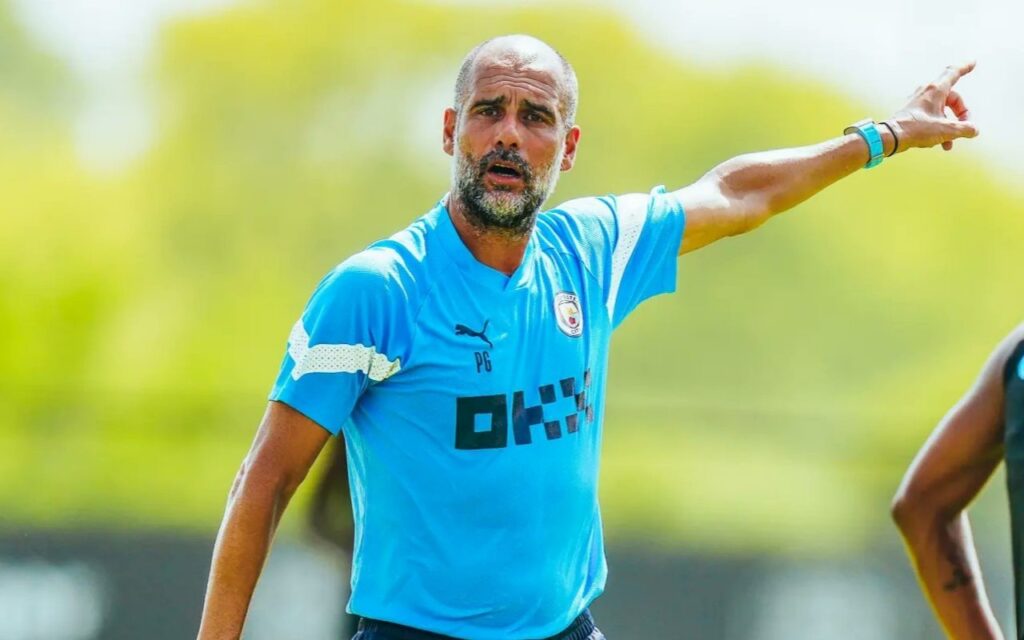
Pep Guardiola is widely recognized as one of the most influential football managers of the modern era. His tactical philosophy has reshaped how teams approach ball possession, pressing strategies, positional play, and game management. Since arriving at Manchester City in 2016, Guardiola has consistently blended innovation with practicality to produce one of the most successful tactical systems in football history.
In this article, we explore the inner workings of Guardiola’s tactics at Manchester City—from build‑up play to defensive organization, positional rotations to pressing triggers—and explain why his systems consistently break down strong opponents and dominate matches. With extensive comparisons, expert insights, and frequently asked questions (FAQs).
A Tactical Philosophy Rooted in Possession Football
At the core of Guardiola’s tactical blueprint at Man City lies possession dominance. His teams seek to control the game through sustained ball circulation, careful spacing, and proactive positioning.
Key Components of Guardiola’s Possession Play
| Principle | Explanation |
|---|---|
| Positional Play (“Juego de Posición”) | Players occupy predefined zones to create superior angles for passes and ensure easy ball progression. |
| Inverted Full‑Backs | Full‑backs tuck into midfield to create numerical advantages and promote superior passing options. |
| Triangular Passing Patterns | Short, quick passing triangles that facilitate quick ball circulation and ball retention. |
| Goalkeeper as Playmaker | Goalkeepers such as Ederson act as a deep playmaker, starting attacks with precise long and short passes. |
Possession is not simply about how long City holds the ball; it’s about where they hold it and how they use that control to unbalance opponents.
Build‑Up Play: From the Back to the Final Third
Goalkeeper Initiation
Guardiola often uses the goalkeeper as a pivotal playmaker in build‑ups. Instead of launching long balls, his keeping units frequently build carefully with defenders.
-
Short ball retention: City initiates attacks with short, controlled passes between goalkeeper and centre‑backs.
-
Goalkeeper distribution decisions: A goalkeeper such as Ederson must possess accurate distribution skills, passing the ball to defenders or directly initiating forward transitions.
This approach limits reliance on high balls and instead leverages City’s technical superiority.
Central Defenders and Midfield Connections
Once the ball leaves the goalkeeper, the next layer involves defenders stepping into midfield.
| Role | Positioning Purpose |
|---|---|
| Centre‑Backs in Midfield | Provide numerical advantage in central build‑up and create short passing options. |
| Holding Midfielder (e.g., Rodri) | Screens opposition press while linking defence and attack. |
This method forces opponents to commit players forward, thereby opening spaces behind the pressing lines for long balls or penetrating passes.
Positional Play (“Juego de Posición”)
At the heart of Guardiola’s tactics is “Juego de Posición” or positional play—a system where players maintain structured positions relative to each other, ensuring balance, spacing, and passing options.
Key Rules of Positional Play
-
Maintain triangular passing shapes
-
Occupy specific horizontal and vertical channels
-
Create numerical superiority in key zones
-
Stretch the opposition through wide players
These rules ensure that City players remain interconnected, reducing turnover risk and increasing attacking efficiency.
Press Resistance and High Circulation
City’s build‑up play becomes most effective under pressure. Guardiola trains his players to resist pressing through:
-
Quick passes between defenders
-
Midfield dropbacks for support
-
Switches of play to free up space
In essence, if an opponent commits players to press tightly on one side, City will often quickly switch play to exploit wider areas.
Attacking Systems: Interplay, Rotations, and Width
The False Nine and Interchangeability
Guardiola frequently deploys an attacker who not only scores but also drops into midfield to aid buildup. Examples at City include:
-
Kevin De Bruyne drifting from midfield to attack
-
Phil Foden or Bernardo Silva oscillating between wings and central zones
This fluidity disrupts defensive marking and creates central overloads.
Width Through Inverted Full‑Backs
In Guardiola’s system, wingers may drift inside while full‑backs provide width—a tactical inversion that ensures:
-
Overloads in midfield
-
Stretching of defensive lines
-
Constant passing outlets on the flanks
This style complicates opponents’ ability to press effectively.
Defensive Tactics: Pressing, Triggers, and Compactness
While possession and attacking creativity define Guardiola’s style, defensive principles at Manchester City are equally calculated.
High Press vs. Mid‑Block
City sets its defensive shape based on opponent build‑ups:
| Defensive Strategy | When Used | Aim |
|---|---|---|
| High Press | Against low‑block teams | Force quick turnovers |
| Mid‑Block | Against wide play teams | Protect central spaces and control transitions |
| Low Block | Against fast counters | Maintain deep structure and force long balls for regain |
This adaptability keeps City defensively resilient without sacrificing forward play.
Press Triggers
Guardiola’s teams don’t press randomly; they press on triggers—specific actions from the opponent, such as:
-
Weak back passes
-
Sideways passes with no outlet
-
Poor body shape of ball carrier
Once these triggers appear, City will activate coordinated pressure to win the ball back.
Midfield Control: The Conductor and The Anchor
Rodri’s Key Role
A modern tactical lynchpin, Rodri’s role contains:
-
Shielding the defence
-
Switching play
-
Transition control
His intelligence enables City to maintain tactical balance between possession and defense.
Attacking Midfield Flexibility
Players such as De Bruyne, Silva, and Foden serve as both:
-
Creators of chances
-
Press breakers
-
Interchangeable attackers
This dynamic midfield versatility makes City a nightmare for defensive structures.
Set‑Pieces: Attack and Defense
Guardiola’s teams are also known for meticulous planning from set‑pieces:
-
Attacking: Routines that exploit zones and open spaces, rotating positions to create confusion.
-
Defensive: Allocation of space over individual man marking—forcing opponents into less dangerous zones.
Guardiola’s Tactical Comparisons
Guardiola vs. Traditional Systems
| Feature | Traditional System | Guardiola’s System |
|---|---|---|
| Goalkeeper Role | Shot‑stopper | Playmaker |
| Full‑Backs | Wide support | Inverters + Width creators |
| Midfield | Static roles | Dynamic, interchangeable |
| Build‑Up | Long clearances | Short, controlled passes |
| Pressing | Reactive | Trigger‑based proactive |
This comparison highlights how Guardiola’s tactical philosophy diverges significantly from older football models.
Key Takeaways: Why Manchester City Wins So Often
1. Positional Play Provides Control
City’s positional structures give them passing options at all times.
2. Flexibility Creates Unpredictability
Fluid roles make City difficult to defend.
3. Strong Press‑Resistance
Advanced ball retention minimizes turnover risk.
4. Midfield Dominance
A tactical lynchpin controls transitions and tempo.
5. Tactical Disruption Through Rotations
Frequent player rotations destabilize defensive markers.
Frequently Asked Questions (FAQs)
1. What formation does Pep Guardiola use at Man City?
Guardiola typically uses a 4‑3‑3 formation with fluid positional rotations and inverted full‑backs.
2. How does Guardiola build from the back?
City teams build from the back using goalkeeper involvement, short passes between defenders, and support from midfielders.
3. What is positional play?
Positional play is a system where players maintain specific spaces and angles to ensure constant passing options and superior field control.
4. What makes City defensively strong despite high possession?
City’s pressing triggers, compact defensive transitions, and mid‑block principles make them defensively robust.
5. How does Guardiola’s style differ from classic counter‑attacking systems?
Guardiola’s style focuses on ball retention and build‑up, while classic counter‑attacking systems prioritize defensive solidity and rapid counter transitions.
6. Why are inverted full‑backs important?
They allow City to create midfield overloads and open space for wide attackers.
7. Does Guardiola’s tactic work against low blocks?
Yes—through patient buildup, ball circulation, and targeted penetrative passes.
8. Who controls the tempo in Guardiola’s City?
The holding midfielder (often Rodri) plays a key role in tempo control.
9. Can Guardiola’s tactics be replicated by other teams?
Many teams attempt similar principles, but Guardiola’s success lies in meticulous role training and player IQ.
10. Is Guardiola’s style effective in European competitions?
Yes—City’s tactical adaptability and ball dominance have made them a European powerhouse.
External Resources for Deeper Tactical Understanding
-
⚽ Dato analysis of Guardiola systems – https://spielverlagerung.com/
-
📊 Guardiola positional play explained – https://thecoachdiary.com/
-
📈 City Stats and data analysis – https://optasports.com/
-
🧠 Breakdowns of Guardiola press resistance – https://tearsheet.co/
-
📍 Midfield role insights – https://whoscored.com/
-
🔁 Tactical interchange analysis – https://statsbomb.com/
-
📚 Positional play theory – https://breakingthelines.com/
-
📖 Zonal marking analysis – https://zonalmarking.net/
-
🏆 UEFA tactical insights – https://uefa.com/
-
📝 Football analytics and tactical updates – https://fourfourtwo.com/
Conclusion: The Tactical Legacy of Pep Guardiola
Pep Guardiola’s tactical blueprint at Manchester City combines strategic innovation, detailed player roles, and tactical adaptability. Through possession dominance, positional play, intelligent pressing, and structured build‑ups, City not only wins games but often controls them from start to finish.
Whether you’re a football analyst, coach, or passionate supporter, understanding Guardiola’s tactics provides insight into why Manchester City has become a benchmark in modern football.