Introduction
The history of Manchester City is one of football’s most remarkable stories. Few clubs have experienced such dramatic highs and lows, evolving from a small church football team in Victorian England into one of the most successful and influential clubs in world football.
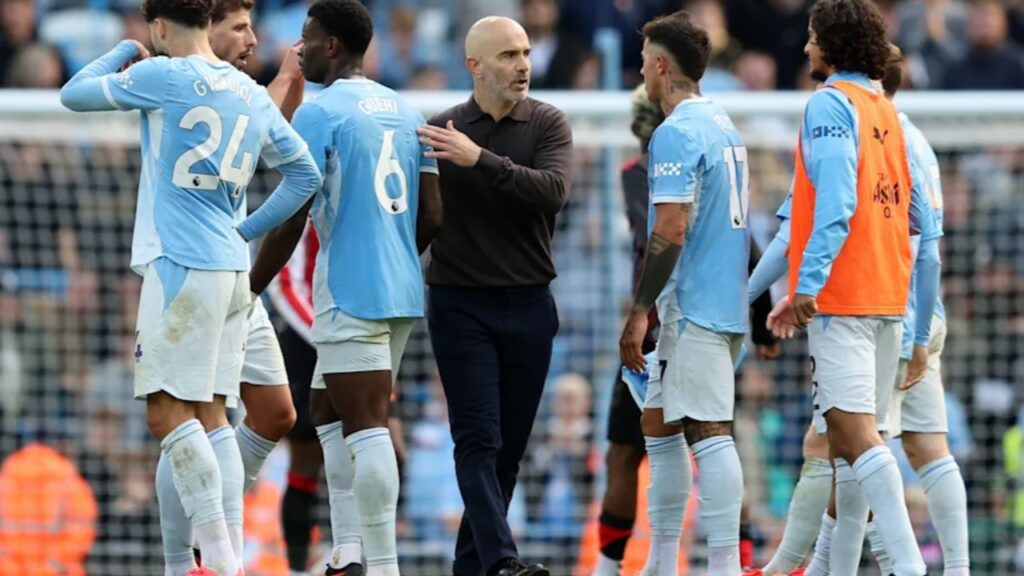
Today, Manchester City is synonymous with Premier League dominance, tactical innovation, and global success. The club has won numerous domestic league titles, lifted the UEFA Champions League, and reached the pinnacle of world football by becoming FIFA Club World Cup champions.
However, Manchester City’s rise did not happen overnight. The club’s journey spans well over a century and includes financial struggles, relegations, historic triumphs, legendary players, iconic managers, and one of the greatest sporting transformations ever witnessed.
This comprehensive guide explores the complete history of Manchester City from its foundation in 1880 to its status as a global football powerhouse, highlighting the key events, defining moments, and influential figures that shaped the Sky Blues.
The Birth of Manchester City (1880)
Manchester City’s story began in 1880, although the club did not originally bear its current name.
It was founded as St. Mark’s (West Gorton) by members of St. Mark’s Church in one of Manchester’s poorest industrial districts.
Why Was the Club Founded?
Unlike many football clubs that were established purely for sporting purposes, St. Mark’s was created to address social issues affecting the local community.
At the time, West Gorton was experiencing:
-
High unemployment
-
Poverty
-
Gang violence
-
Youth crime
-
Difficult working conditions
Church leaders believed organized sport could unite local young men, provide healthy recreation, and reduce violence. Football became a powerful tool for strengthening community ties and promoting positive values.
This charitable and community-focused beginning remains one of the most inspiring aspects of Manchester City’s history.
From St. Mark’s to Manchester City
The club underwent several name changes during its early years.
| Year | Club Name | Reason |
|---|---|---|
| 1880 | St. Mark’s (West Gorton) | Founded by St. Mark’s Church |
| 1887 | Ardwick AFC | Relocated to Hyde Road |
| 1894 | Manchester City FC | Financial restructuring and broader city identity |
The adoption of the name Manchester City Football Club reflected a desire to represent the entire city rather than a single neighborhood.
Early Success and the First Major Trophy
Manchester City’s first significant achievement came in 1904 when the club won the FA Cup.
This victory was historic because City became the first football club from Manchester to win a major national trophy.
The success established Manchester City as one of England’s emerging football powers and attracted increasing support across the region.
The Hyde Road Era
Before moving to Maine Road, Manchester City’s home was Hyde Road.
Although basic by modern standards, Hyde Road became one of England’s most atmospheric football grounds.
Features of Hyde Road
-
Large standing terraces
-
Wooden grandstands
-
Passionate local support
-
Crowds exceeding 30,000 spectators
-
Close proximity between fans and players
Unfortunately, much of the stadium was destroyed by fire in 1920, prompting the club to seek a new home.
Winning the First League Championship
Manchester City’s first English league title came during the 1936–37 First Division season.
The achievement marked another important milestone and demonstrated that City could compete with England’s best clubs.
However, football can be unpredictable.
Remarkably, the club was relegated the following season despite scoring more goals than any other team in the division.
It remains one of the most unusual events in English football history.
The Golden Years of the 1960s and 1970s
Manchester City enjoyed another highly successful period during the late 1960s and early 1970s.
Under the management of Joe Mercer and coach Malcolm Allison, the club played exciting attacking football and assembled one of the strongest squads in Europe.
Major Honours During This Era
| Trophy | Year |
|---|---|
| First Division | 1968 |
| FA Cup | 1969 |
| League Cup | 1970 |
| European Cup Winners’ Cup | 1970 |
| Community Shield | 1968 |
This period is remembered as one of the club’s first golden ages.
Difficult Decades
Following the success of the early 1970s, Manchester City experienced a prolonged period of inconsistency.
During the 1980s and 1990s, the club struggled with:
-
Financial instability
-
Managerial changes
-
Relegations
-
Poor recruitment
-
Lack of consistency
One of the lowest points came in 1998, when Manchester City were relegated to England’s third tier for the first time in their history.
Many believed the club’s best days were behind them.
The Remarkable Comeback
Instead of disappearing into obscurity, Manchester City began an extraordinary recovery.
The club quickly earned promotion back to the Championship and then the Premier League.
The resilience shown during these difficult years strengthened the bond between supporters and the club.
Many lifelong fans consider surviving the lower divisions to be just as important as winning trophies.
A New Era Begins (2008)
A defining moment in Manchester City’s history occurred in 2008 when the club was acquired by Abu Dhabi United Group.
The new ownership brought significant investment into every area of the organization.
Improvements included:
-
Modern training facilities
-
Youth academy expansion
-
Stadium development
-
Global scouting network
-
Elite player recruitment
Rather than focusing solely on expensive transfers, Manchester City invested in long-term infrastructure that continues to benefit the club today.
Roberto Mancini and the Return to Glory
Italian manager Roberto Mancini helped transform Manchester City into genuine title contenders.
The breakthrough came in 2011, when City won the FA Cup, ending a 35-year wait for a major trophy.
One year later, the club secured its first Premier League title in unforgettable fashion.
Sergio Agüero’s dramatic injury-time goal against Queens Park Rangers remains one of the greatest moments in football history.
The Guardiola Revolution
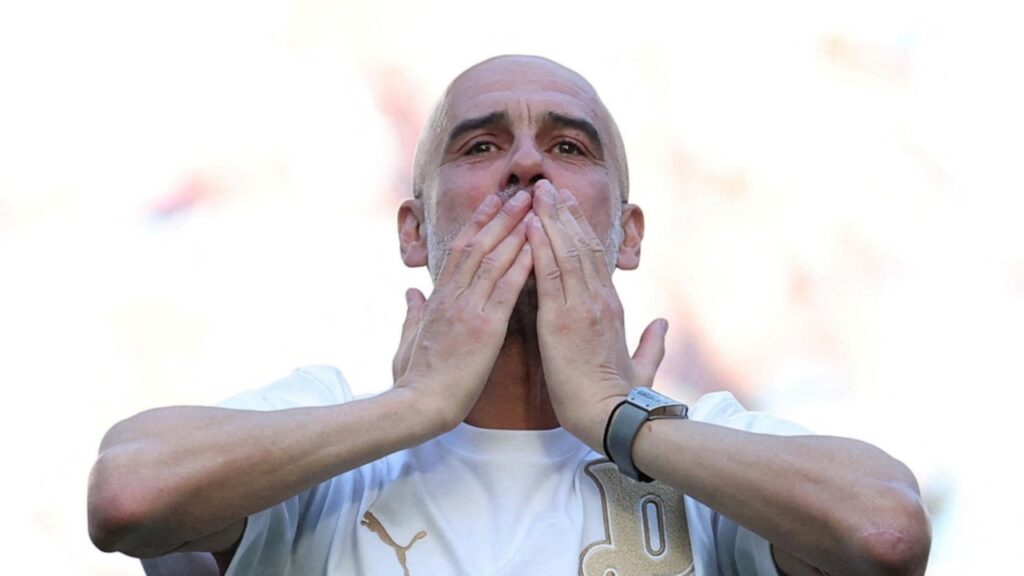
Pep Guardiola arrived in 2016 and elevated Manchester City to unprecedented heights.
His philosophy emphasized:
-
Possession football
-
High pressing
-
Tactical flexibility
-
Technical excellence
-
Squad rotation
Under Guardiola, Manchester City established numerous Premier League records, including:
-
Most points in a season
-
Most league wins
-
Most goals scored
-
Four consecutive Premier League titles (2019–2024)
His influence has extended beyond Manchester, inspiring coaches around the world.
Winning the UEFA Champions League
For years, critics argued that Manchester City could not be considered among Europe’s greatest clubs until they won the UEFA Champions League.
That changed during the 2022–23 season.
City defeated Inter Milan 1–0 in the final, with Rodri scoring the winning goal.
The victory completed years of progress and fulfilled the club’s biggest ambition.
Completing the Historic Treble
The 2022–23 season became the greatest campaign in Manchester City’s history.
The club won:
-
Premier League
-
FA Cup
-
UEFA Champions League
This continental treble placed Manchester City alongside the greatest teams English football has ever produced.
Becoming World Champions
Following Champions League success, Manchester City lifted two additional international trophies.
UEFA Super Cup
City defeated Sevilla to win their first UEFA Super Cup.
FIFA Club World Cup
Later in 2023, Manchester City defeated Fluminense to become FIFA Club World Cup champions.
For the first time, the Sky Blues were officially recognized as the best club team in the world.
Manchester City’s Trophy Evolution
| Era | Major Success |
|---|---|
| 1880–1903 | Club formation |
| 1904 | First FA Cup |
| 1937 | First League Title |
| 1968–1970 | Domestic and European success |
| 2011–Present | Most successful era in club history |
Legendary Players Who Shaped Manchester City
Throughout its history, Manchester City has been home to many iconic footballers.
| Player | Legacy |
|---|---|
| Billy Meredith | Early football superstar |
| Bert Trautmann | Legendary goalkeeper |
| Colin Bell | Club icon and midfield great |
| Francis Lee | Prolific goalscorer |
| Mike Summerbee | Creative winger |
| Sergio Agüero | Club’s all-time leading scorer |
| Vincent Kompany | Inspirational captain |
| David Silva | Midfield magician |
| Kevin De Bruyne | One of the Premier League’s greatest playmakers |
| Rodri | Champions League-winning hero |
Each player has left a lasting mark on Manchester City’s identity.
Iconic Managers in Club History
| Manager | Achievement |
|---|---|
| Joe Mercer | Built the successful late-1960s team |
| Roberto Mancini | Ended the trophy drought |
| Manuel Pellegrini | Won the Premier League and League Cup |
| Pep Guardiola | Most successful manager in club history |
Their leadership has helped define different eras of Manchester City’s success.
Manchester City’s Home Grounds
| Stadium | Years |
|---|---|
| Hyde Road | 1887–1923 |
| Maine Road | 1923–2003 |
| Etihad Stadium | 2003–Present |
Each stadium represents a different chapter in the club’s evolution.
Manchester City’s Global Growth
Manchester City has expanded far beyond England.
Today the club enjoys:
-
Millions of supporters worldwide
-
International fan clubs
-
Global commercial partnerships
-
One of the world’s leading football academies
-
State-of-the-art facilities
-
Strong digital presence
The club’s influence extends across Europe, Asia, Africa, North America, and South America.
Why Manchester City’s History Matters
Manchester City’s history demonstrates that success is rarely immediate.
The club has experienced:
-
Financial crises
-
Relegation
-
Rebuilding
-
Tactical innovation
-
Record-breaking achievements
These experiences have shaped a resilient culture that continues to define Manchester City today.
The journey from a church football team to world champions illustrates how vision, patience, and strategic planning can transform an organization.
Conclusion
The history of Manchester City is far more than a story of trophies and championships. It is a tale of community, perseverance, reinvention, and ambition.
Founded in 1880 to bring hope and unity to a working-class neighborhood, Manchester City has evolved into one of the most respected and successful football clubs on the planet. Along the way, the club has overcome financial hardship, endured relegation, celebrated legendary players, embraced tactical innovation, and achieved the ultimate dream of becoming European and world champions.
Today, Manchester City stands as a symbol of sustained excellence, but its success is rooted in more than a century of determination and progress. Understanding the club’s rich history provides a deeper appreciation of how the Sky Blues became one of football’s true global giants.
Frequently Asked Questions (FAQs)
What is the history of Manchester City?
The history of Manchester City began in 1880 when the club was founded as St. Mark’s (West Gorton). It later became Ardwick AFC before adopting the name Manchester City Football Club in 1894. Since then, the club has grown into one of the world’s most successful football teams.
When was Manchester City founded?
Manchester City was founded in 1880 as St. Mark’s (West Gorton), making it one of the oldest professional football clubs in England.
Why was Manchester City originally created?
The club was established by members of St. Mark’s Church to provide healthy activities for local young people and reduce poverty-related crime and gang violence in West Gorton.
What was Manchester City’s first major trophy?
Manchester City’s first major trophy was the FA Cup, won in 1904, making them the first Manchester club to win a major national competition.
When did Manchester City win their first league title?
Manchester City won their first English league championship during the 1936–37 First Division season.
Who is Manchester City’s greatest manager?
Many supporters consider Pep Guardiola the greatest manager in Manchester City’s history due to his record-breaking success, including multiple Premier League titles and the club’s first UEFA Champions League victory.
When did Manchester City win the Champions League?
Manchester City won their first UEFA Champions League title during the 2022–23 season, defeating Inter Milan in the final.
What is Manchester City’s greatest achievement?
Many regard the 2022–23 continental treble—winning the Premier League, FA Cup, and UEFA Champions League in the same season—as the greatest achievement in Manchester City’s history.
How many major trophies has Manchester City won?
As of the end of the 2024–25 season, Manchester City has won 36 major trophies, including domestic league titles, domestic cups, European honors, and international titles.
Why is Manchester City’s history important?
Manchester City’s history is a remarkable example of perseverance, community values, and long-term planning. From humble beginnings as a church team to becoming world champions, the club’s journey highlights one of the greatest transformations in modern football.
External Resources
-
Official Manchester City – https://www.mancity.com/
-
Premier League – https://www.premierleague.com/
-
UEFA – https://www.uefa.com/
-
FIFA – https://www.fifa.com/
-
The Football Association – https://www.thefa.com/
-
National Football Museum – https://www.nationalfootballmuseum.com/